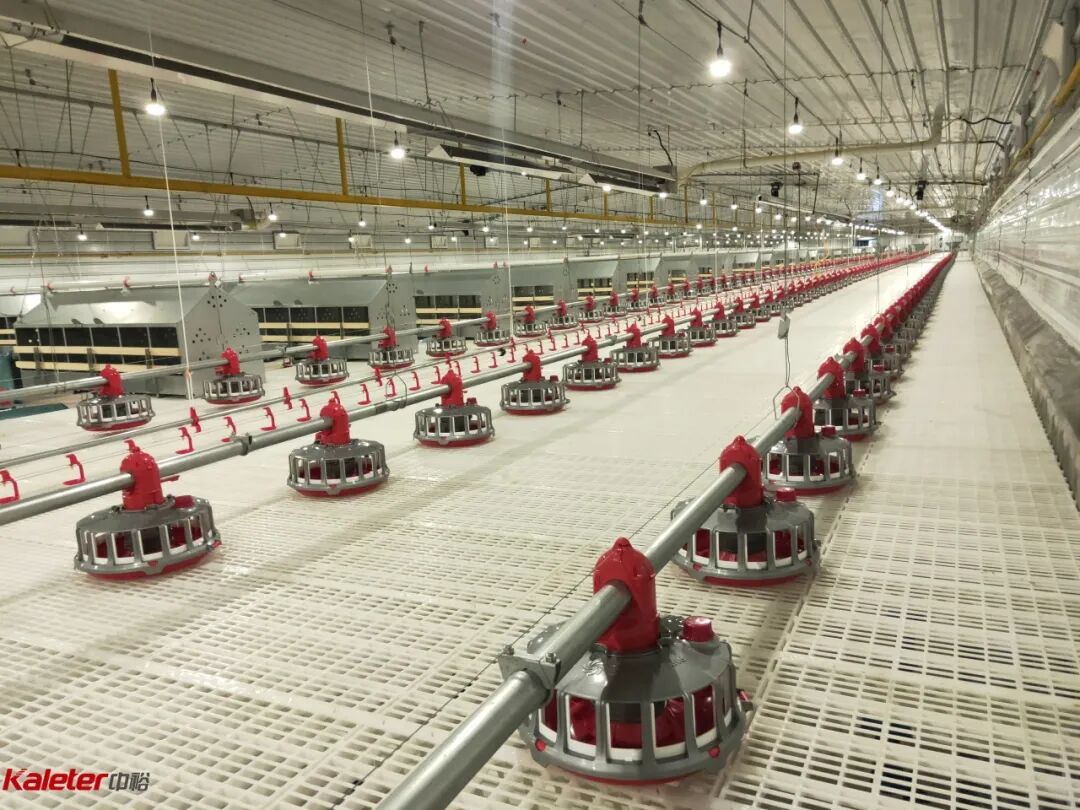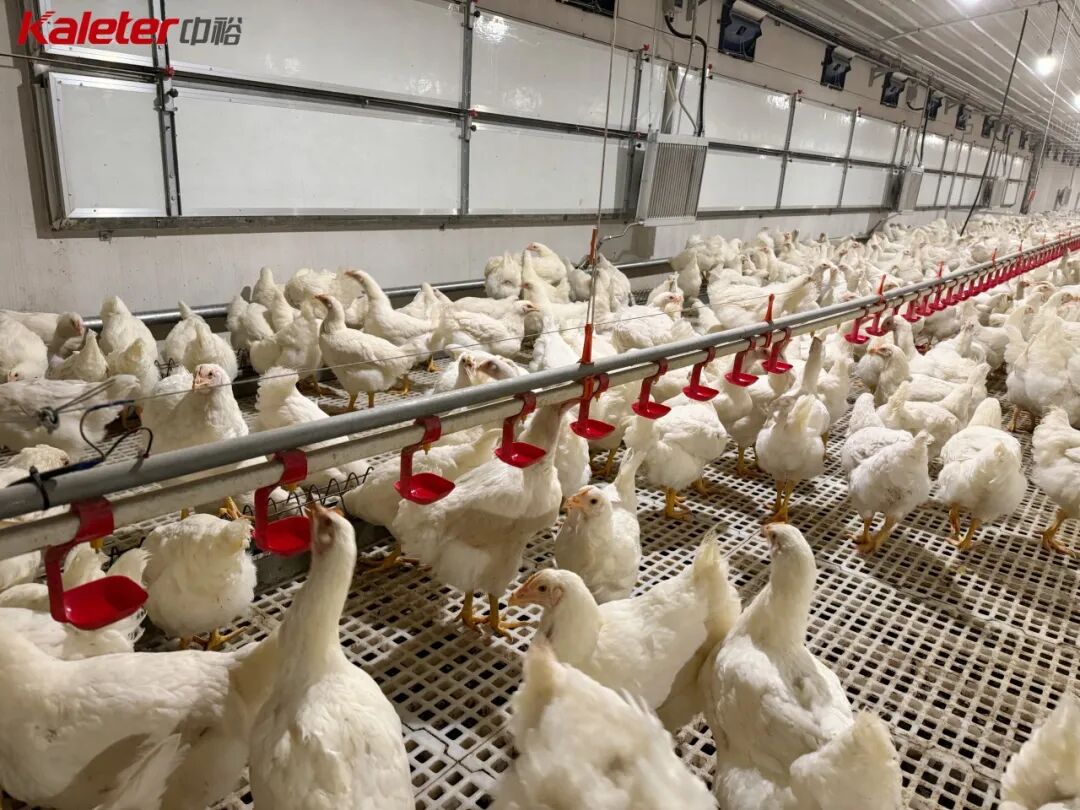
In large-scale poultry production, house hygiene has a direct effect on flock health, feed conversion, and returns. Manure building up on the floor breeds bacteria, birds damage their feet, and cleaning takes a great deal of labour. These problems are familiar to most producers. Kaleter's slat flooring improves the material, the structure, and the installation method together, so the house environment improves in one step. It suits commercial flocks and breeder flocks alike, and it lowers both management cost and disease risk.
PP material, durable and easy to disinfect
The panels are made of polypropylene. The material has no odour and contains no harmful substances, so it is safer for birds in direct contact with it.
It is also chemically stable. It resists corrosion and does not absorb water, so manure and dirty water cannot soak into the panel. Even after long service the flooring does not turn mouldy or start to smell.
The panel surface has no burrs, so it will not cut a bird's footpad. That reduces footpad dermatitis and leg injuries.
Curved structure, quick to install
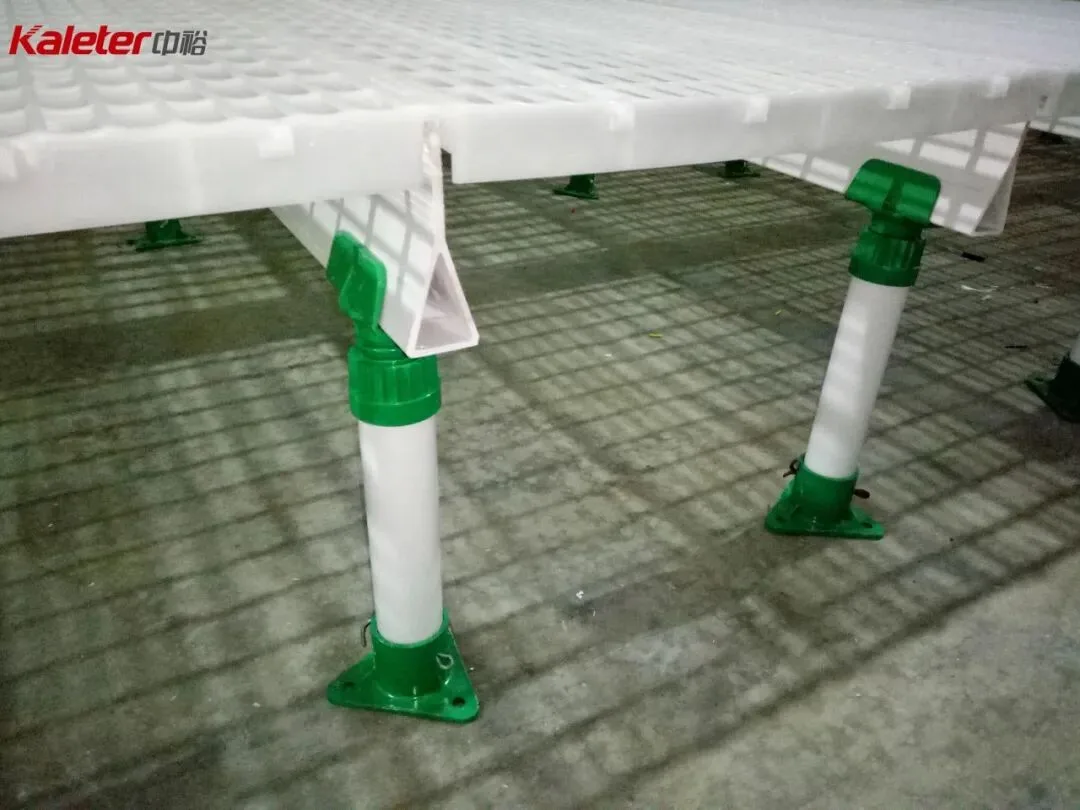
The floor assembles as modules on support beams. The joints between panels are curved, which makes them simple and fast to put together.
The matching support legs are adjustable. Each connector allows 10 cm of height adjustment, which solves the common problem of an uneven house floor. Once laid, the finished surface is flat and stable.
Suits many kinds of poultry, and pays back over time
The support structure has moderate flex and carries pressure well. It will not sag or crack under dense stocking, and it lasts.
Manure drops straight through, so birds never stand in it. That lowers the rate of respiratory disease and intestinal infection considerably.
The system is highly adaptable and can be used in poultry sheds of any type. It is laid once and serves for years, which makes it basic hardware for a standardised, modern house.
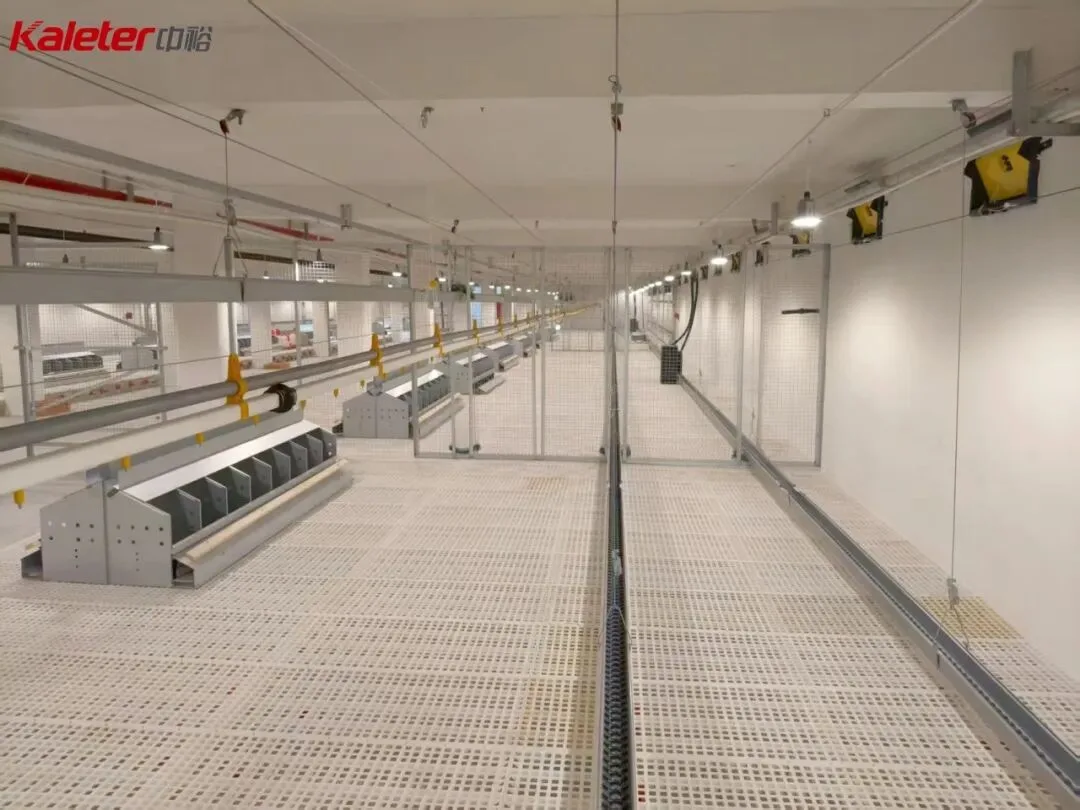
Cutting cost and raising output starts with the hardware that shapes the environment. Kaleter's PP slat flooring improves house hygiene at the source. It reduces the labour spent on manual manure removal, lowers the disease rate, and improves the quality of the birds leaving the house, which moves a farm toward standardised, well-regulated, and efficient production.