Leading companies are putting money into broilers
The first half of 2026 brought a wave of expansion in the white-feathered broiler sector. Dozens of the largest companies, among them Yikou Food, Sunner, Hefeng, Shanxi Daxiang, Zhonghong Sanrong, Wodechenlong, Shandong Taihe and Shandong Zhongji, started new builds or expansion projects in the same period. Total investment passed 9 billion yuan, and the pace of full-chain development picked up sharply.
The pattern in those investments points to a shared view across the industry. Long-term growth in broiler production is treated as close to certain, and companies are securing capacity across the whole chain at once: breeding stock, commercial-scale growing, slaughter and further processing, prepared foods, and pet food.
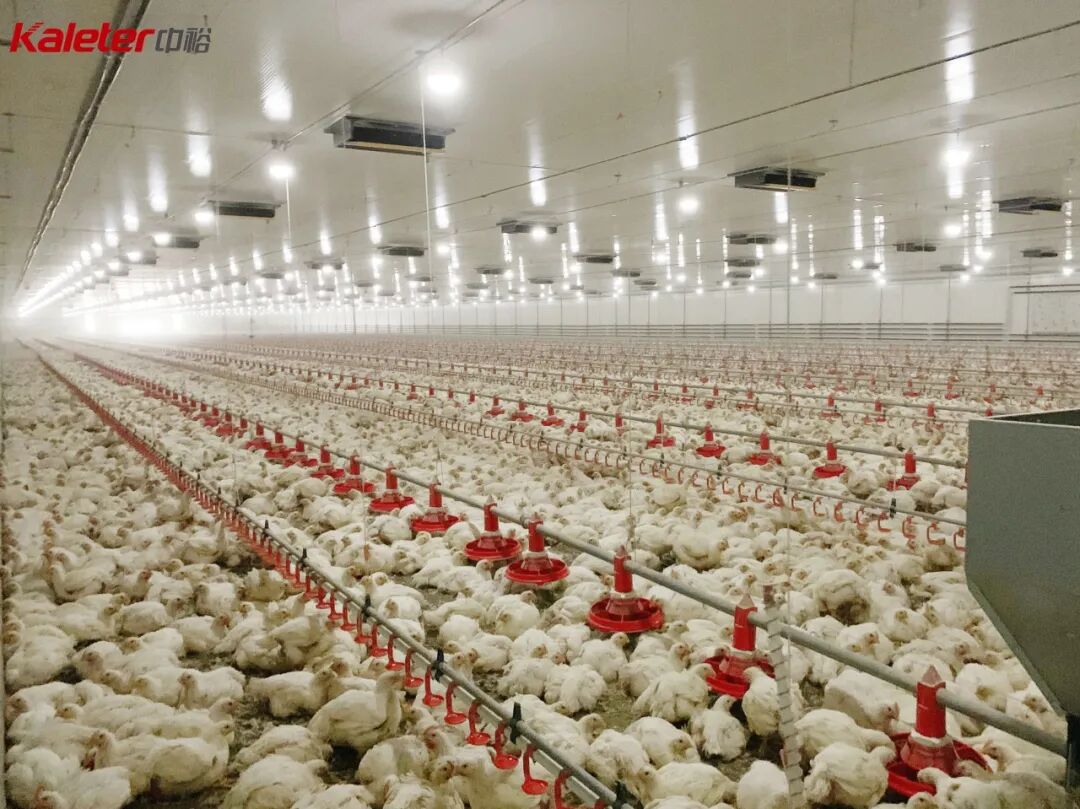
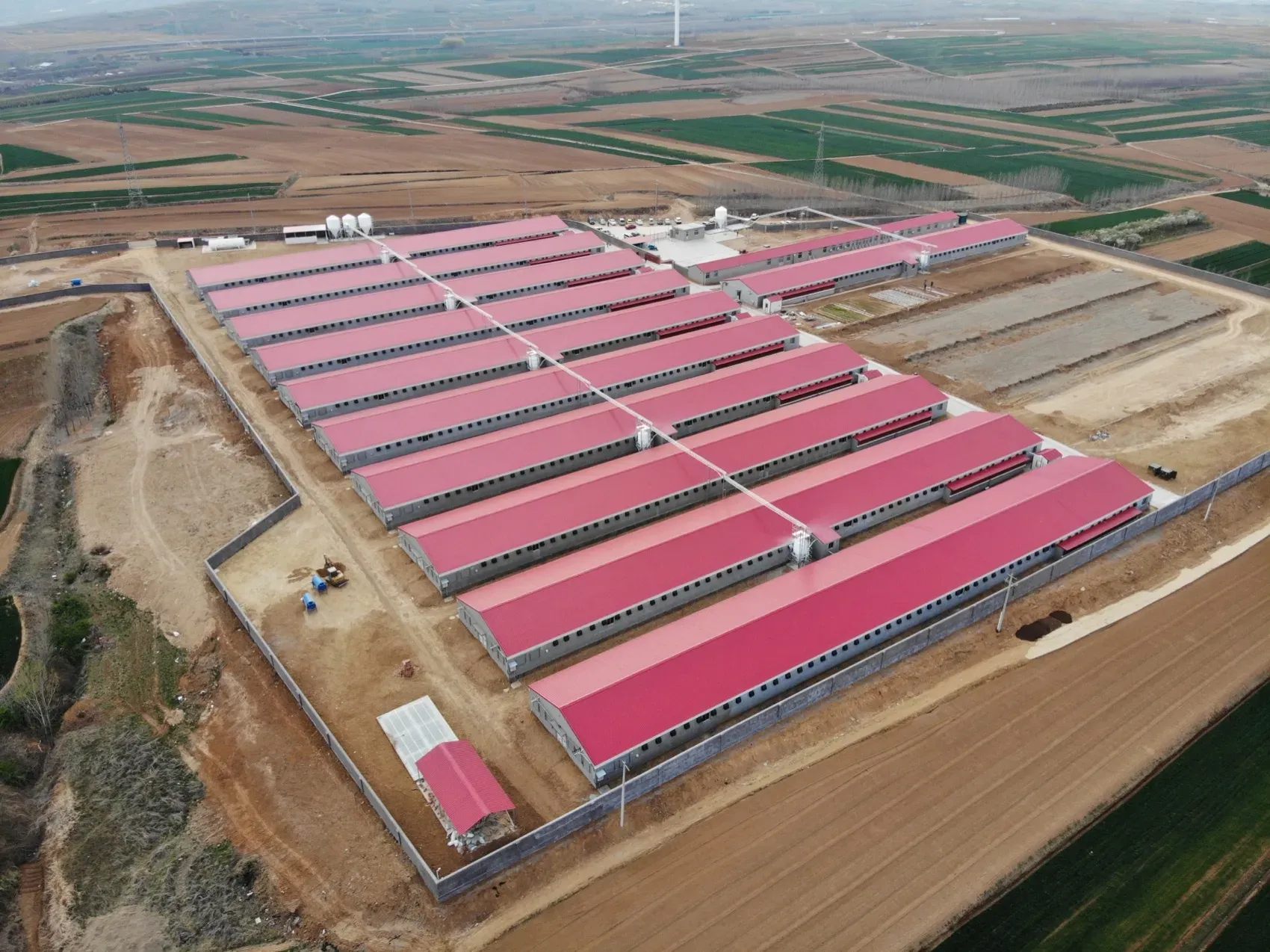
On capacity, several large projects broke ground or came online together. Hefeng's Siping full-chain project runs to 1.64 billion yuan. Shandong Taihe committed 1 billion yuan for 200 million birds of slaughter capacity. Wodechenlong put 600 million yuan into what will be the world's largest hatchery at 500 million chicks. Zhonghong Sanrong's industrial park is 850 million yuan for 100 million birds. Single projects at this scale now routinely count slaughter and hatching capacity in the hundreds of millions of birds.
On breeding stock, Sunner's intelligent hatchery and Wodechenlong's own broiler genetics project are both aimed at developing domestic breeding lines and reducing reliance on imported genetics.
On the production model, every one of the new projects is built for standardized, intensive, and automated large-scale farming. Traditional smallholder production is exiting the market at speed, and high-density automated housing has become the default specification for a new plant.
Kaleter broiler systems
Kaleter has spent more than a decade on poultry housing equipment and offers two complete systems, cage and floor raising. Both are already installed on benchmark broiler projects running a million birds or more a year, which is the scale the current round of expansion is building toward.
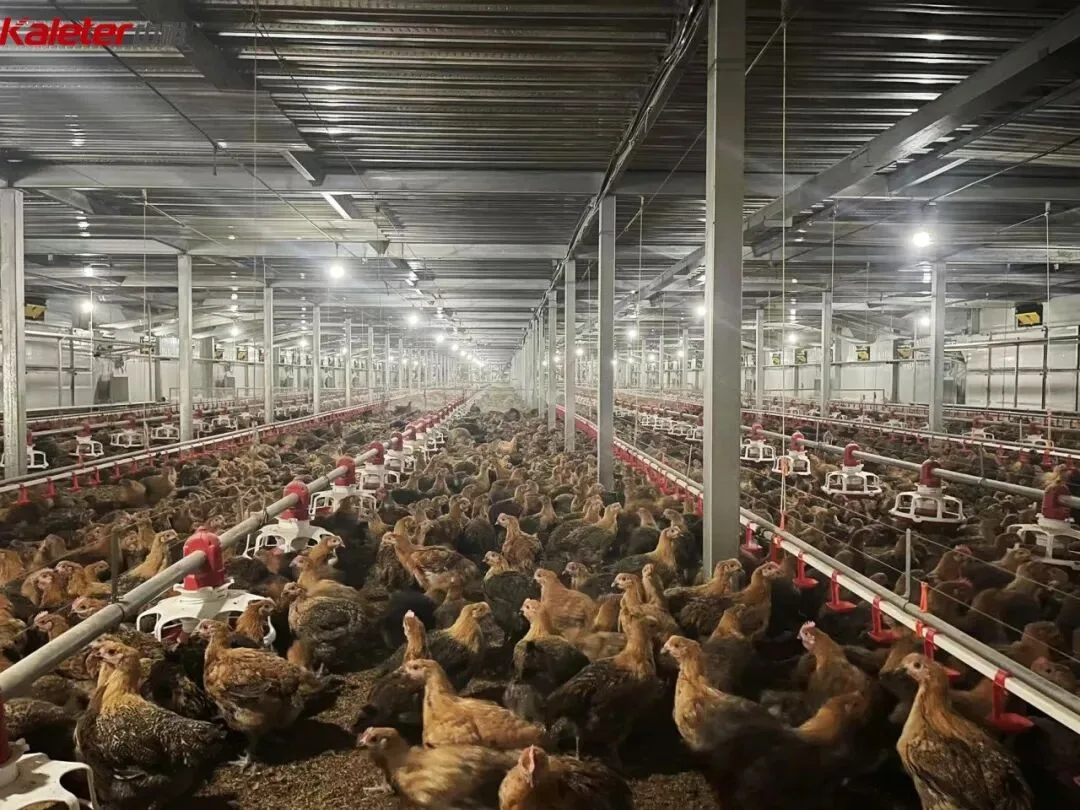
Floor-raising system
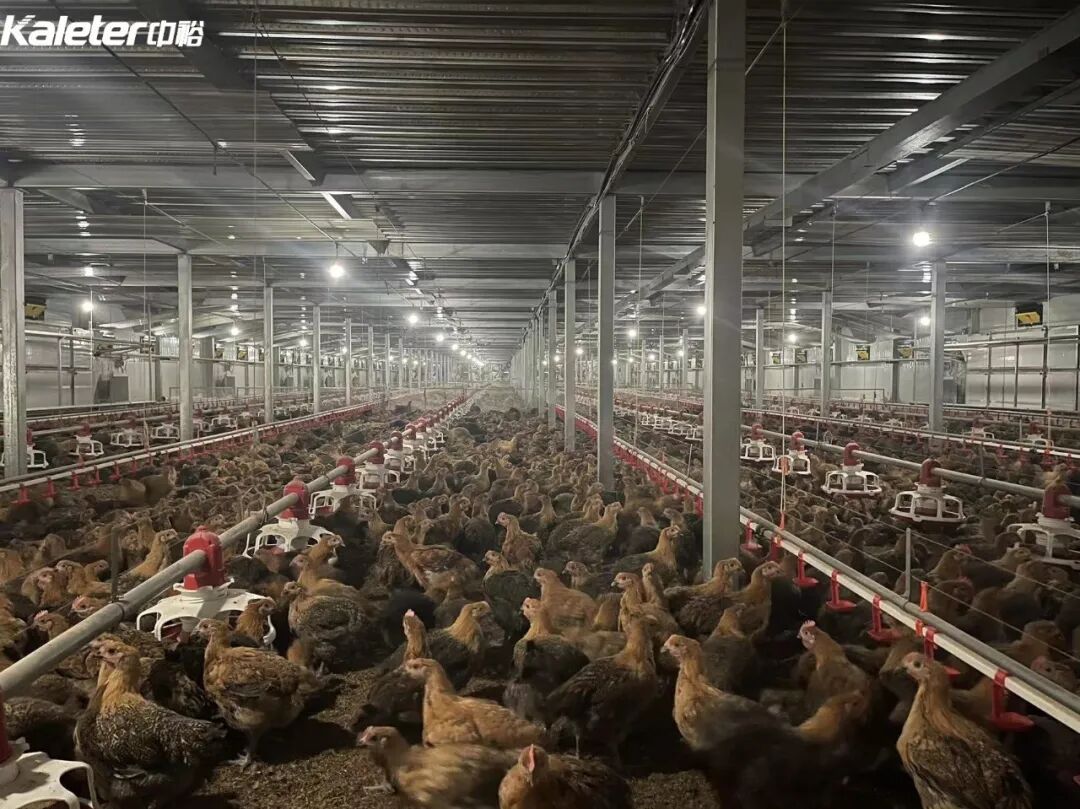
Birds have room to move, and the system meets both domestic and international animal welfare standards. Polypropylene slat flooring covers the full area so manure drops away from the birds, which keeps the house environment in better condition.
The layout is modular and flexible. It suits a new build or a retrofit equally, the modules assemble on site, and an older house can be upgraded directly rather than replaced.
Maintenance is straightforward and parts are common across the range. Automatic ventilation and manure removal come as part of the package, so the system stays simple to operate.
Cage system
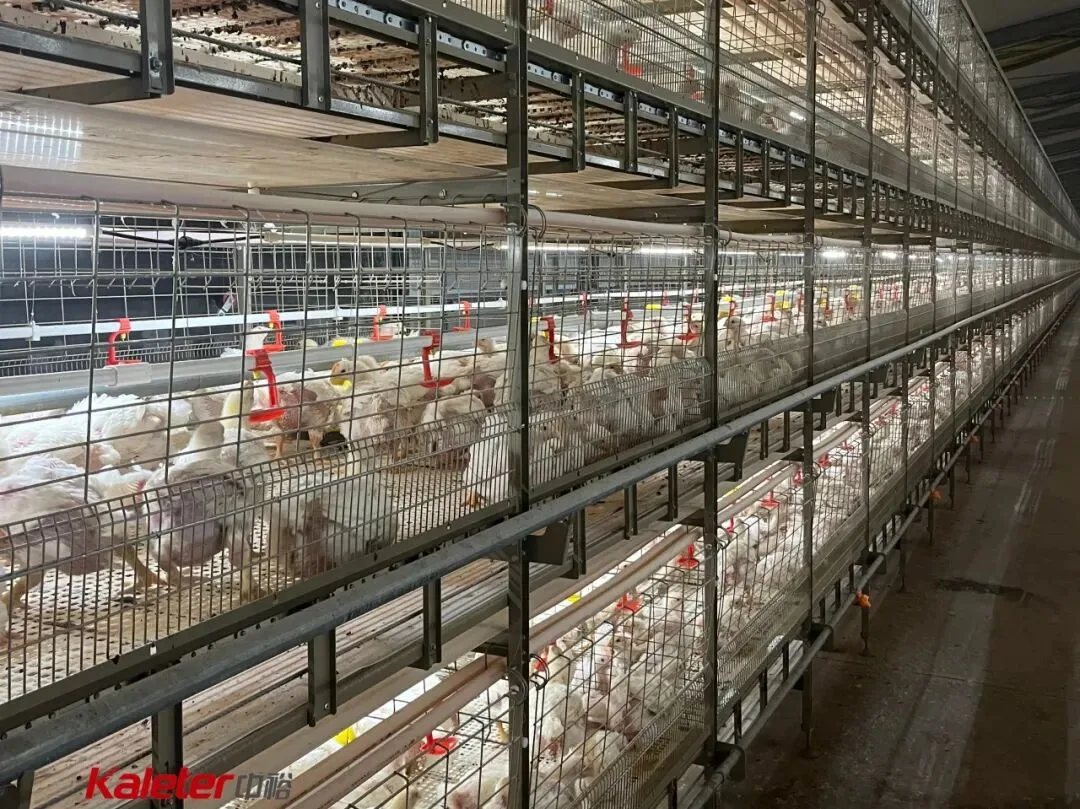
Production costs run lower. Feed conversion is 10 points lower than conventional floor raising, medication costs come down, and the building cost per bird is lower as well.
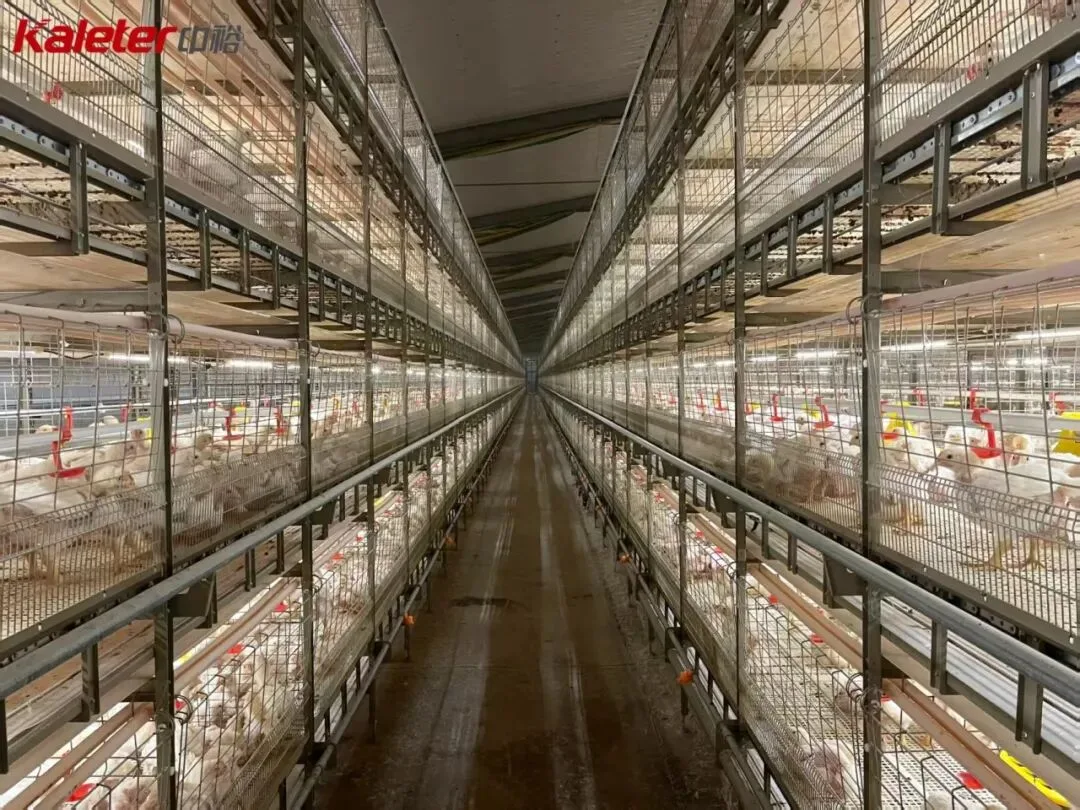
Ventilation inside the cage is good and manure does not reach the floor, which keeps conditions cleaner.
The multi-tier stacked structure carries more than 40 percent more birds per unit of floor area than conventional floor raising.
More than equipment
Kaleter supplies the whole package rather than a crate of parts.
Site planning is done for the specific project, with a cage or floor layout designed around the company's target output and the land available, and set up to fit the rest of the chain.
Equipment comes as a complete set: feeding, watering, manure removal, climate control, manure treatment, and central feed silos, all from one supplier instead of several.
EPC turnkey delivery covers manufacturing, installation on site, commissioning and operator training in one package, which shortens the time from build to first placement and gets capacity earning sooner.
Technical support continues after handover, with service teams across the country and farming advice to match, including for the newer domestic white-feathered breeding lines.