For large-scale egg farms, how the flock is managed during peak laying season decides most of the operation's profit and loss. Hidden among the flock, hens that have permanently stopped laying are the easiest loss to overlook.
These are hens whose ovaries or oviducts have suffered irreversible damage from disease. No amount of liver and kidney support, detox care, or hormone regulation can restore their ability to lay. But they keep eating normally, each one going through about a quarter pound (115 grams) of feed a day that turns into nothing but waste. By one farm's accounting, recovering the upfront cost lost on a single unproductive hen takes a full day's egg revenue from fifty high-producing hens, and just covering her ongoing feed takes the daily output of five more. Left in the flock long term, hens like this steadily eat into the farm's profit.
Traditionally, farm workers pick out unproductive hens by touch and sight, an experience-based method sometimes called "one touch, five looks": feeling the tightness of the abdomen, then checking the comb and wattle, feather color, pigment fading, droppings, and the vent. But this depends heavily on an experienced worker's judgment. It is subjective, error-prone, and slow.
On a large farm, with rows of cages and large bird counts, checking every cage by hand is slow and labor-intensive. Birds get missed or misjudged, and unproductive hens go undetected and keep wasting feed. There is also no way to monitor egg quality in real time, so cracked or damaged eggs slip through and quality varies from batch to batch. Both problems hold back the farm's overall returns.
An AI Inspection Robot Replaces the Manual Check
To address the slow, error-prone, hard-to-manage nature of manual sorting, Kaleter built an intelligent inspection robot for egg-laying hen farms.
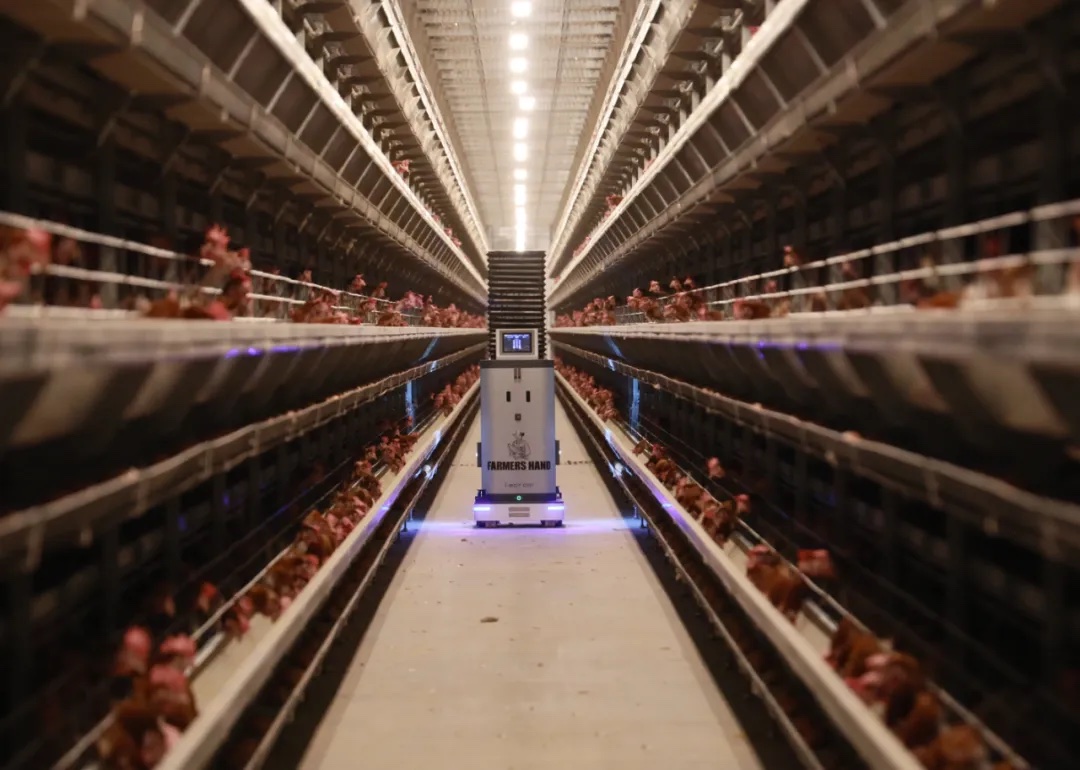
Built on AI vision and data modeling, the robot is designed to solve the problems that come with manual sorting. It captures the physical traits of unproductive hens, combines that with each cage's egg-laying data to build a production model, and flags unproductive hens directly, cutting down on human error and missed checks. At the same time, it automatically counts eggs per cage and identifies cracked or damaged eggs, tracking egg quality around the clock. Running unattended on a 24-hour inspection cycle, it feeds the data it collects back to the farm, giving an accurate, ongoing read on the flock's condition to support more precise management, with the aim of lowering cost, improving consistency, and increasing output across the operation.
The core profit logic for large-scale egg farming comes down to cutting wasted feed, keeping output quality steady, and raising overall efficiency. The traditional manual method is too slow and too error-prone for what modern large-scale farming needs.
Kaleter's inspection robot replaces manual labor with AI: identifying unproductive hens accurately, keeping tight control on egg quality, and giving data-driven support for detailed flock management. It addresses wasted feed, inconsistent quality, and loose oversight, and is built to raise both the laying rate and overall returns for modern, large-scale egg farms.